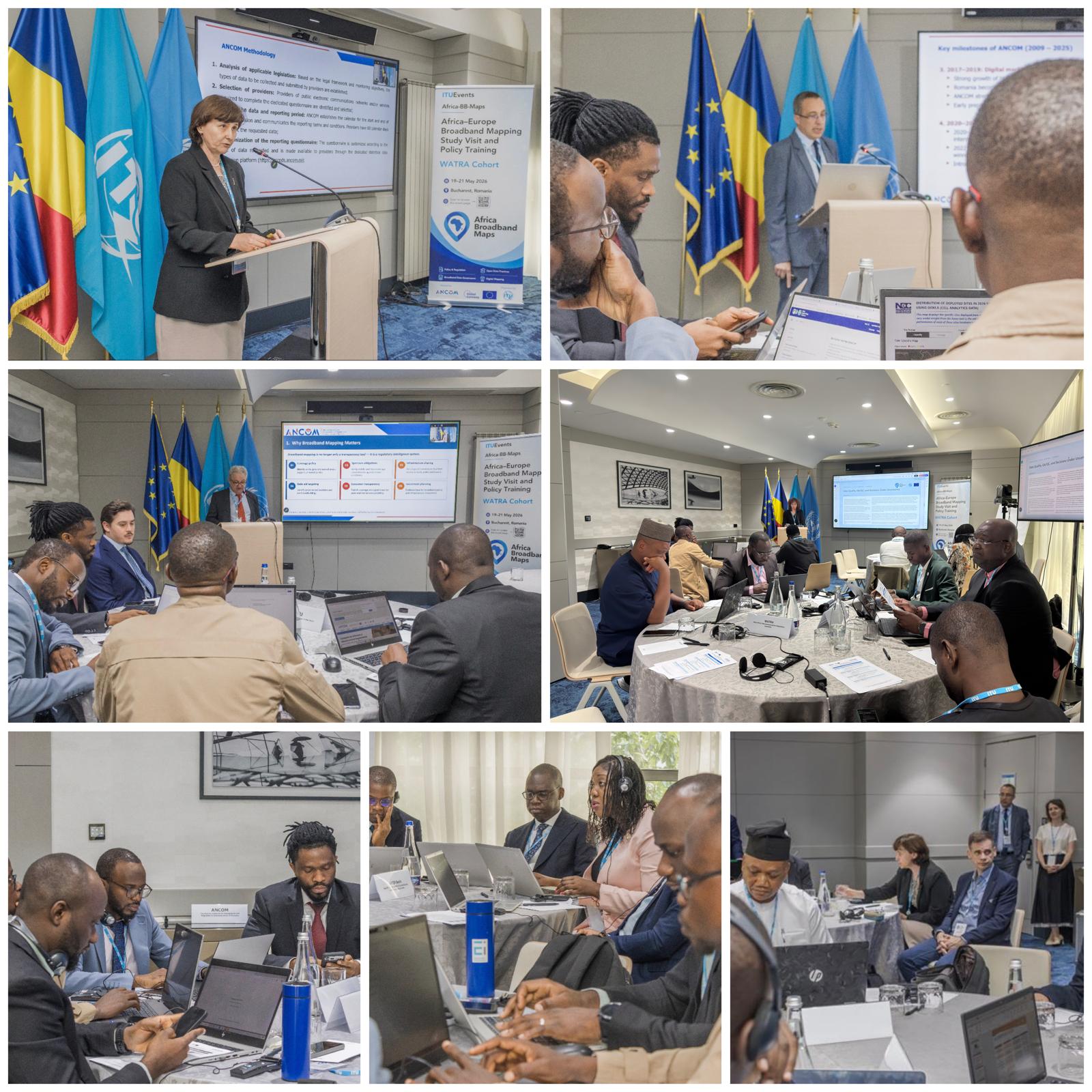

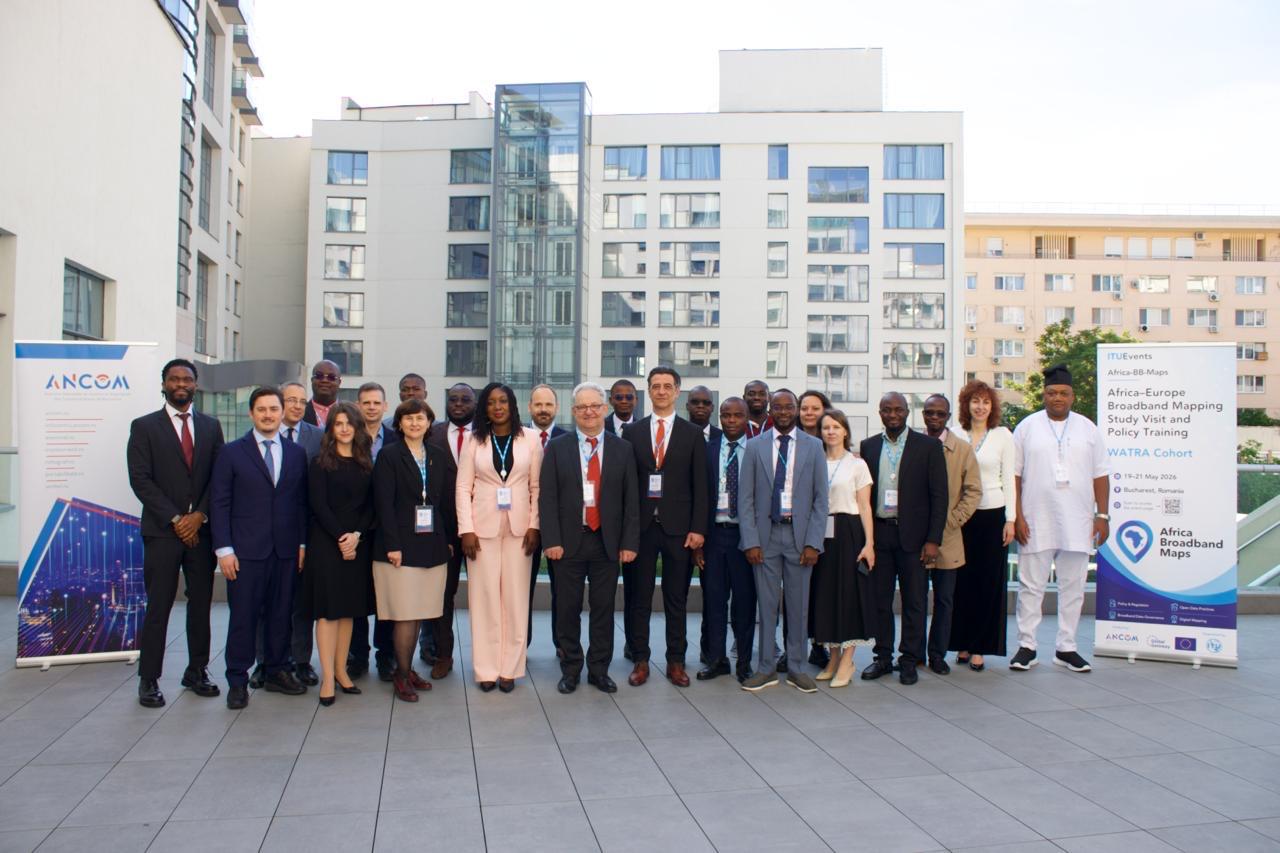
WATRA attended ITU’s Africa-Europe BB Mapping Study Visit and Policy Training, which held from the 19th to the 21st of May 2026 in Bucharest, Romania.
The three-day course was organized by ITU and the National Authority for Management and Regulation in Communications of Romania (ANCOM), was supported by Global Gateway and the European Union (EU), and was designed for the WATRA Cohort of policymakers, regulators, and technical focal points involved in the governance, regulation, or implementation of national broadband mapping systems.
The training combined European and African experiences to strengthen the policy, legal and regulatory capacities of national authorities (NRAs) responsible for broadband mapping governance and data-driven connectivity planning, and to advance evidence-based approaches for better connectivity outcomes. Through case studies, peer learning and regulatory simulation exercises, participants worked to test policy responses to real-world scenarios involving data-sharing challenges, incomplete datasets and regulatory enforcement mechanisms, solutions, and challenges.
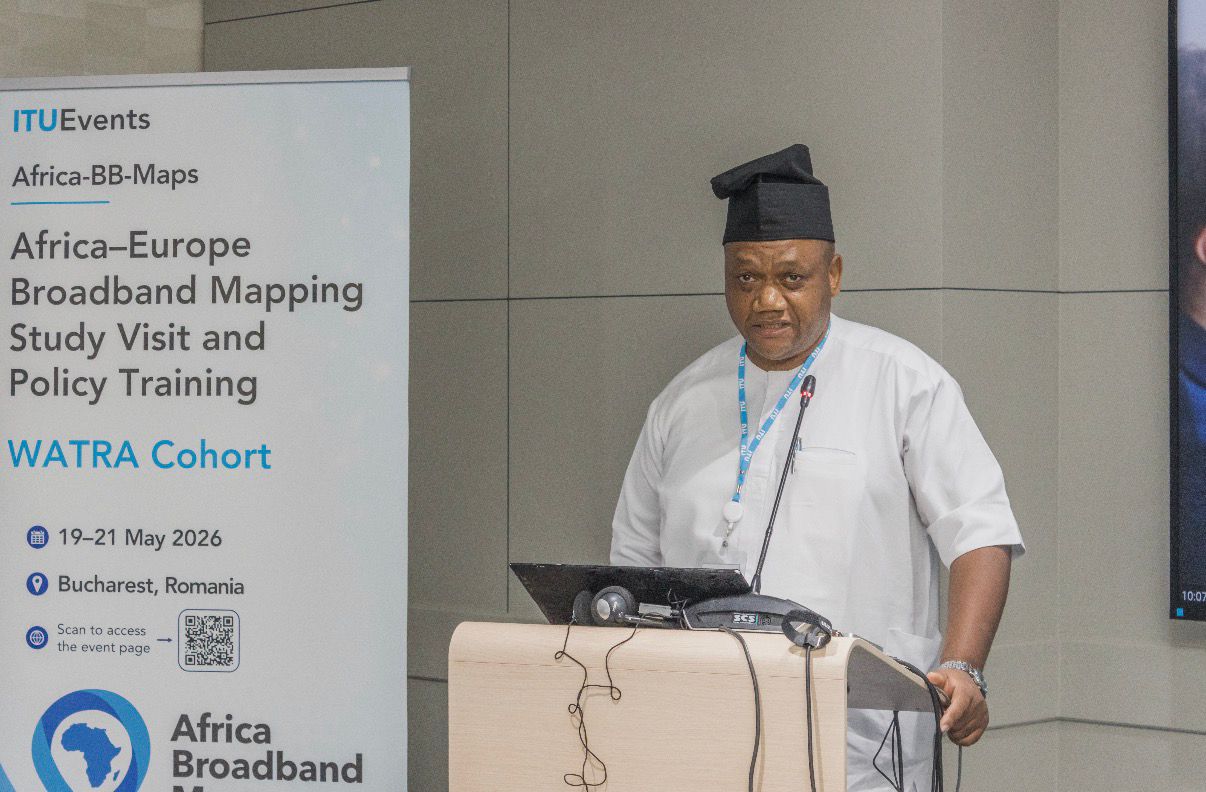
Mr. Ruffus Samuel, WATRA’s Principal Manager, Partnerships, attended the workshop, championing WATRA’s role as a strategic part of the regional broadband mapping process. Presenting to the participants, he emphasized WATRA’s role in harmonizing broadband policies and technical standards, facilitating regional data exchange, increasing transparency for investors and policymakers, supporting infrastructure sharing, and strengthening regional coordination for cross-border planning. As the regulatory association for the West African sub-region, WATRA is able to organize training workshops, support evidence-based regulatory and policy decisions, provide technical assistance to NRAs, and encourage peer learning and regional collaboration.
“At WATRA, we strongly believe that no country can achieve sustainable digital transformation in isolation. Connectivity does not stop at borders,” Mr. Samuel stated in his address to the attendees of the training. “When West Africa connects better, West Africa grows stronger. And when our regions connect through cooperation, shared knowledge, and innovation, we build a more integrated, inclusive, and prosperous world for all.”